
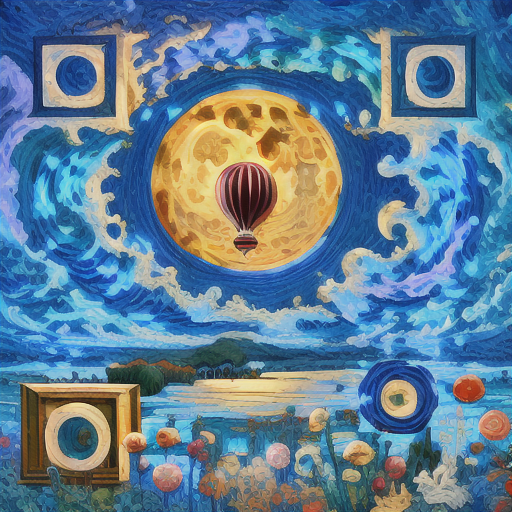
Introduction
For years, designers have tried to weave visual identities into QR codes, hoping to make them feel less like digital static and more like an integrated part of the overall composition. We have seen multiple ways to approach this over time, from simple logo overlays and halftone patterns to manipulating the underlying math of the codes, and most recently, relying on generative AI.
Yet, despite these creative efforts, it is still difficult to find a method that yields a consistently scannable QR code while actually giving designers the flexibility to tune the style and scene to fit their original vision.
In this post, we will walk through the evolution of these design techniques and provide an overview of how well the recent generative AI techniques perform. Finally, we will introduce a new approach: 72QR, which treats the QR code as a conversational canvas, allowing anyone to easily generate QR as Art.
Why the look of QR codes matters?
QR codes have become an indispensable bridge from the physical to digital worlds. They offer an incredibly convenient way to share information exactly where it is needed, accessible the moment a phone camera is raised.
The problem? Physical space is at a premium, and the standard black-and-white QR code is not visually appealing. Audiences have developed “QR blindness”. We ignore these blocky squares until we absolutely have to use them. Forcibly dropping a giant standard QR code into a carefully curated environment is like scrawling a massive phone number on a gallery wall. It disrupts the aesthetic and undermines the visual identity.
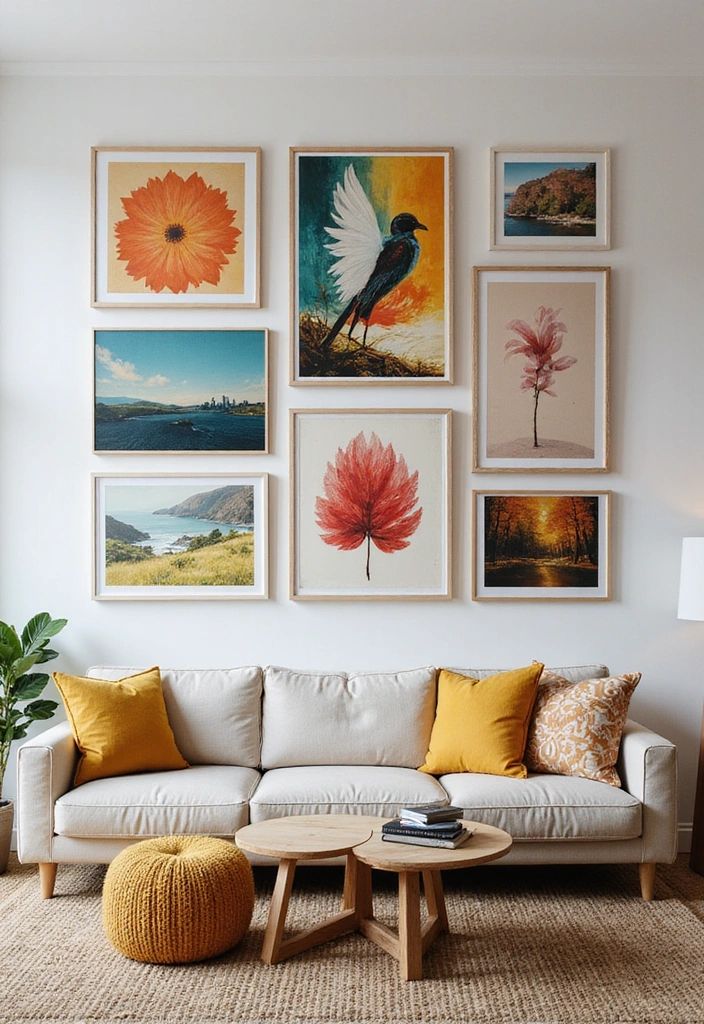
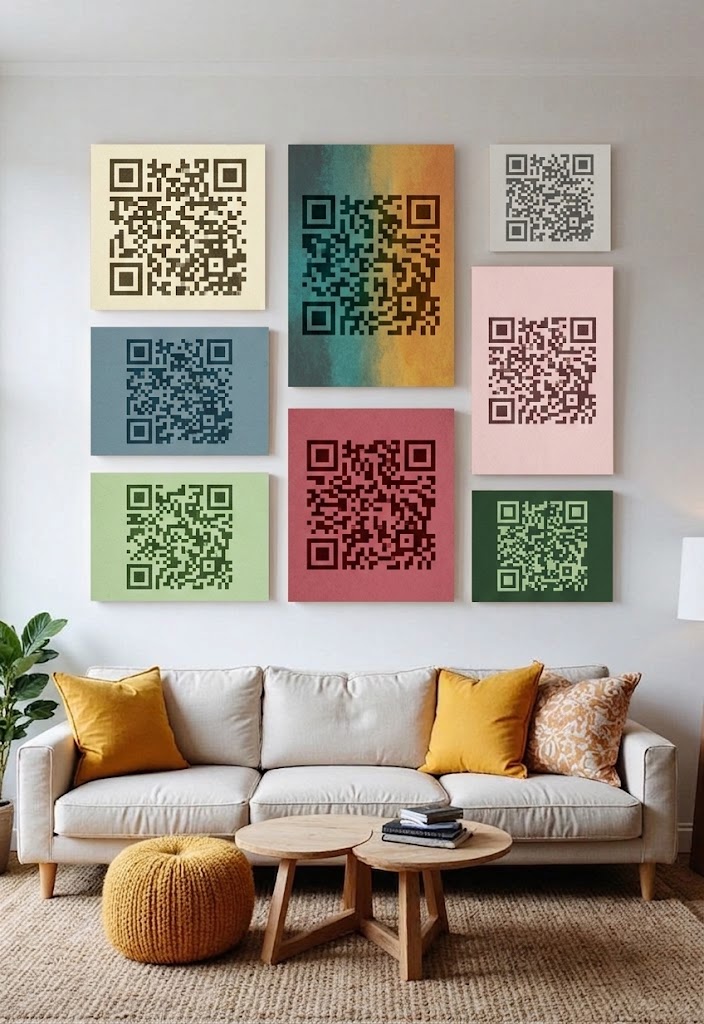
But what if we could design QR codes as pieces of art, transforming them from an eyesore into a decorative element?
The Evolution of Creative QR Codes
Over the years, the industry has developed a few primary techniques to integrate imagery into QR codes, attempting to make them blend into a broader visual scene:
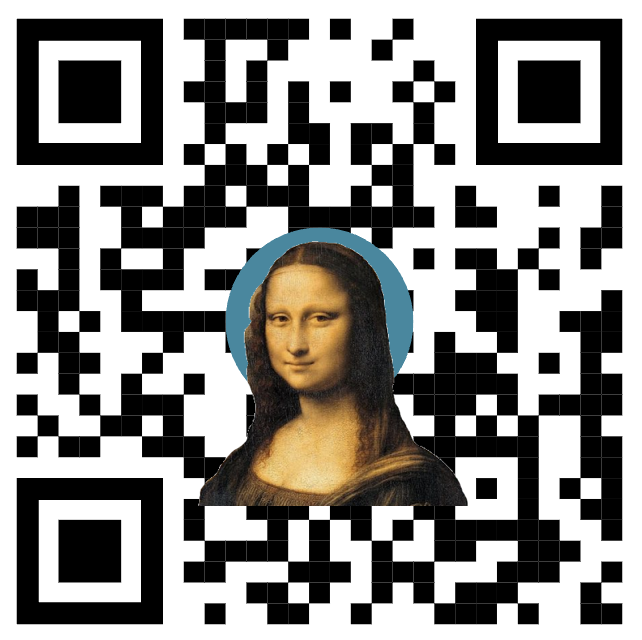
Overlay: The most common approach. It places a logo or image directly on top of the QR code. The code remains scannable only thanks to its built-in error correction. However, there is a strict threshold to this—cover too much of the code, and the errors can no longer be corrected. Furthermore, the image is highly restricted in placement; it can never obscure the structural anchor patterns of the QR code.
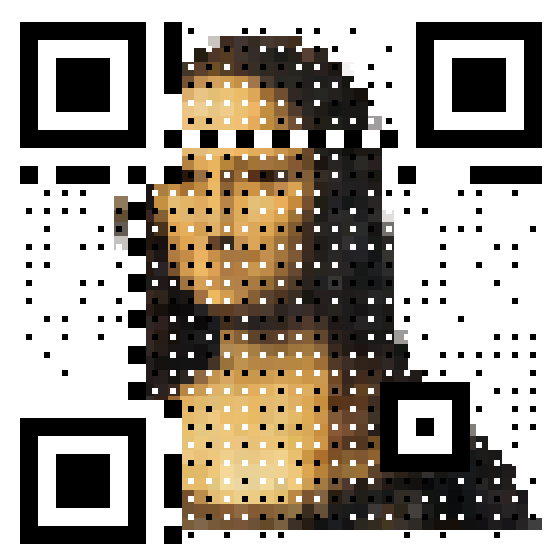
Halftone: This technique exploits the way scanners actually read the code. Scanners only check the exact center point of each module (a black/white block in a QR code) to determine if it is black or white, ignoring the rest of the pixels in a module. Halftone takes advantage of this by shrinking modules into smaller dots, leaving space to reveal a background image underneath the QR code.
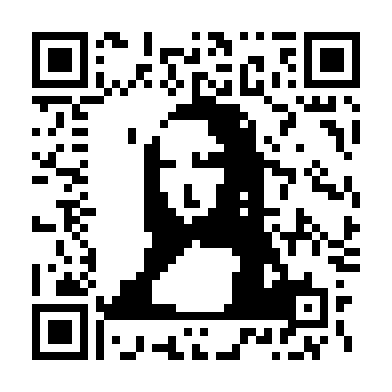
QArt: QR code relies on the math of RS code to encode/decode with error correction capability. The QArt technique is to take advantage of the underlying math to generate QR code that has a visual skeleton similar to a reference image while still encoding the same information and being scannable without introducing any module errors like what the overlay sacrifices.
The Promise and Pitfalls of AI Generators
Generative AI is the latest frontier. These models are capable of producing incredibly natural, artistic QR codes, but they come with a steep learning curve. There is a post providing an overview of how to tune QR codes with the open source AI models.
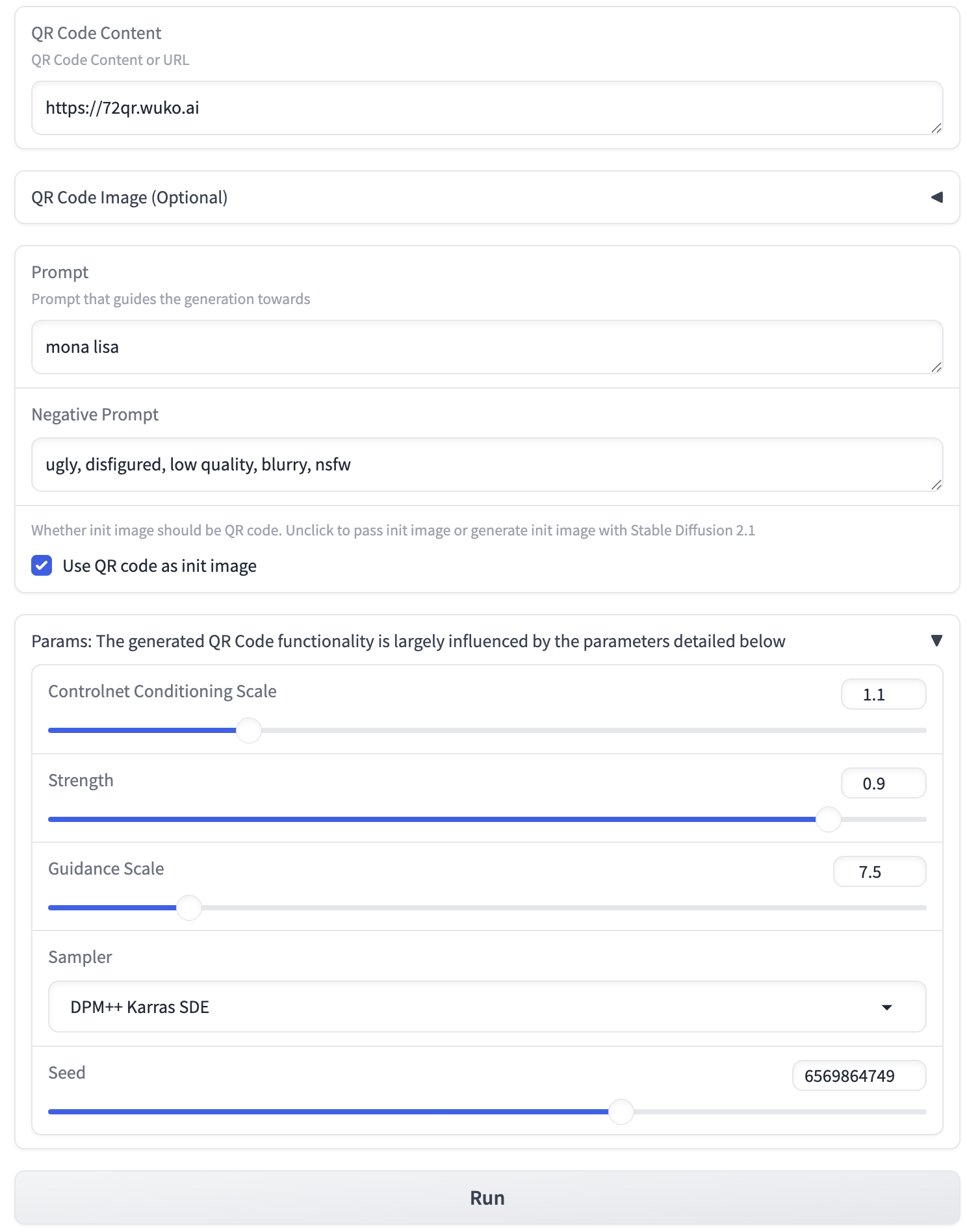
As seen in the typical AI-based QR generator UI above, the parameters can be overwhelming for novel users, without regard to the trial-and-error experiences required to master prompting across different models.
To harness the generation by tuning the parameters, you need to understand both how QR codes work and how the AI generators interpret your instructions. This requires deep knowledge of the underlying math of QR codes, as well as the inner workings of the AI models. Otherwise, it is likely that you will be lost or wasted a lot of time in the process of tuning your QR code.
There are a lot of paid services providing more user friendly interfaces, by hiding away the parametric complexity, to generate QR codes using AI models. However, it can be challenging to fulfill both the aesthetic, scannability, and creative freedom requirements.
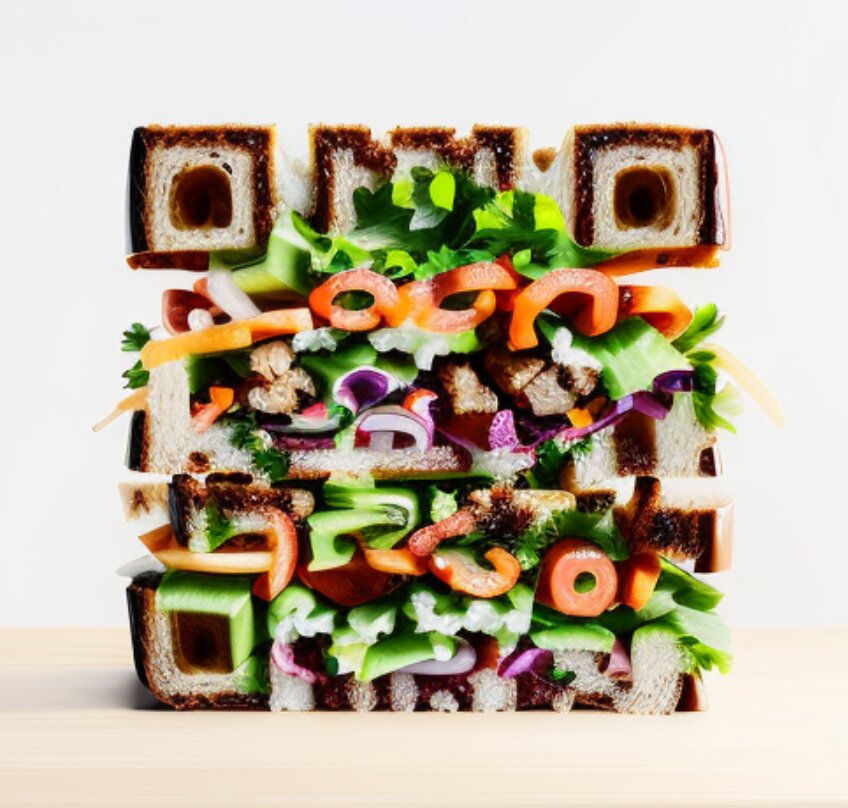
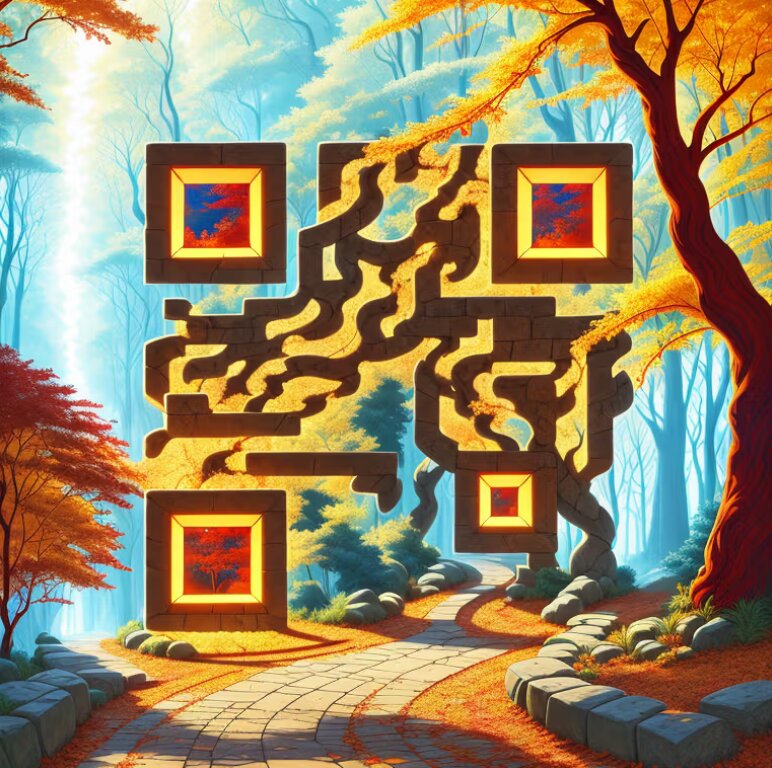
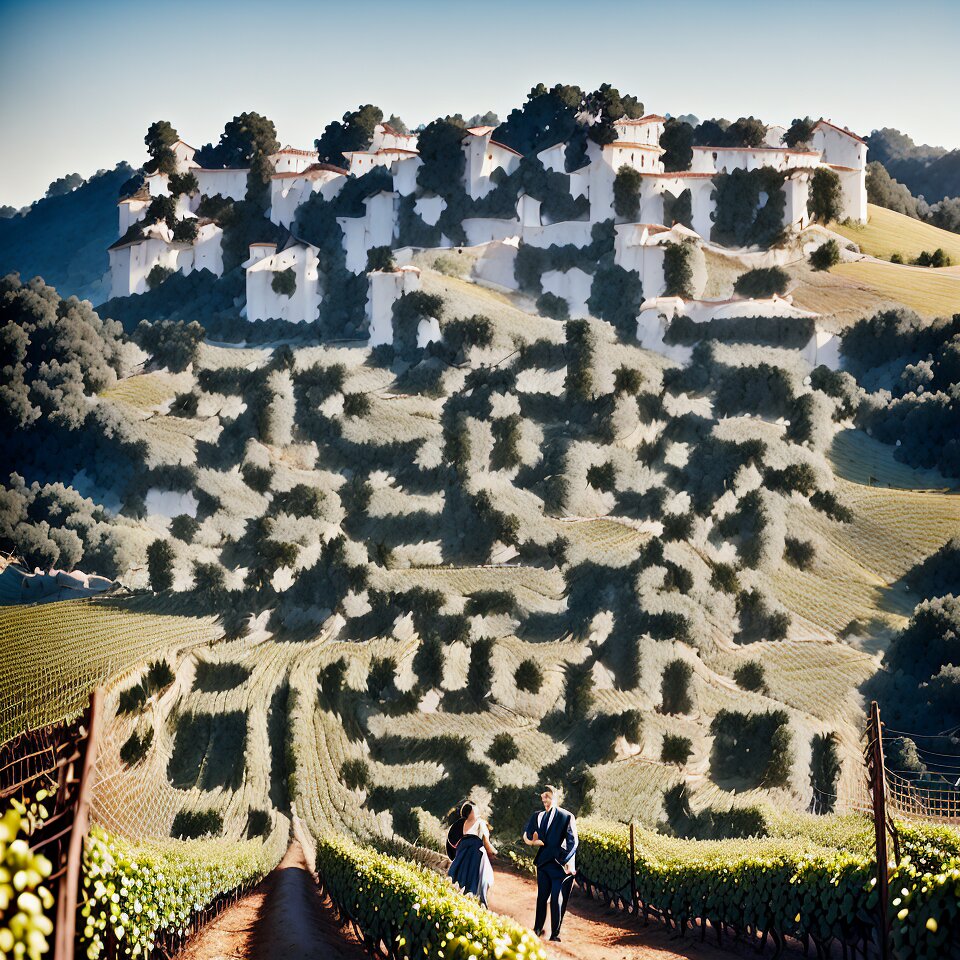
Take the examples above. They are perfectly scannable, but the scene composition makes no logical sense. They feel uncanny and visually jarring.
On the other hand, the following examples seem visually appealing at a certain degree, but they are not scannable.
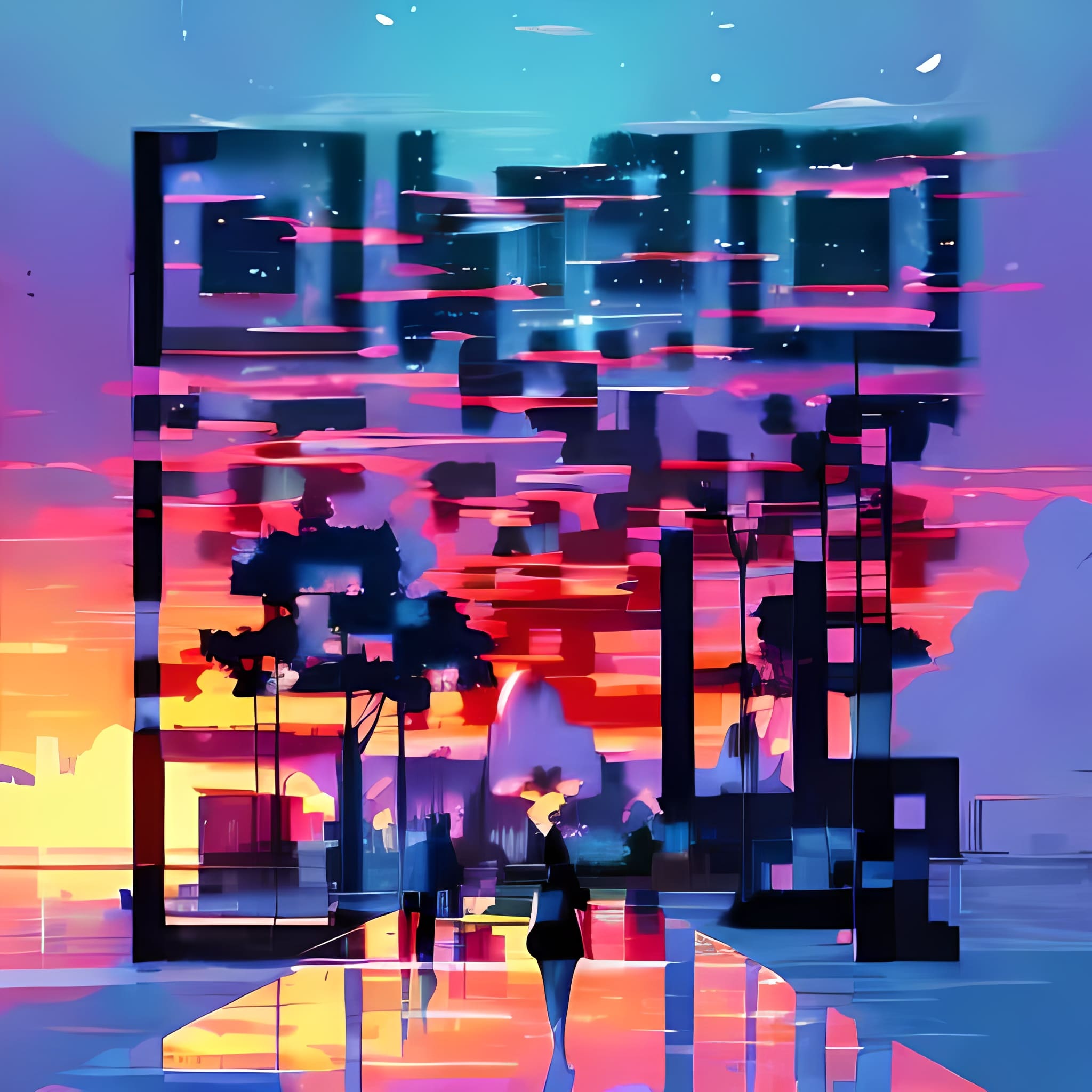
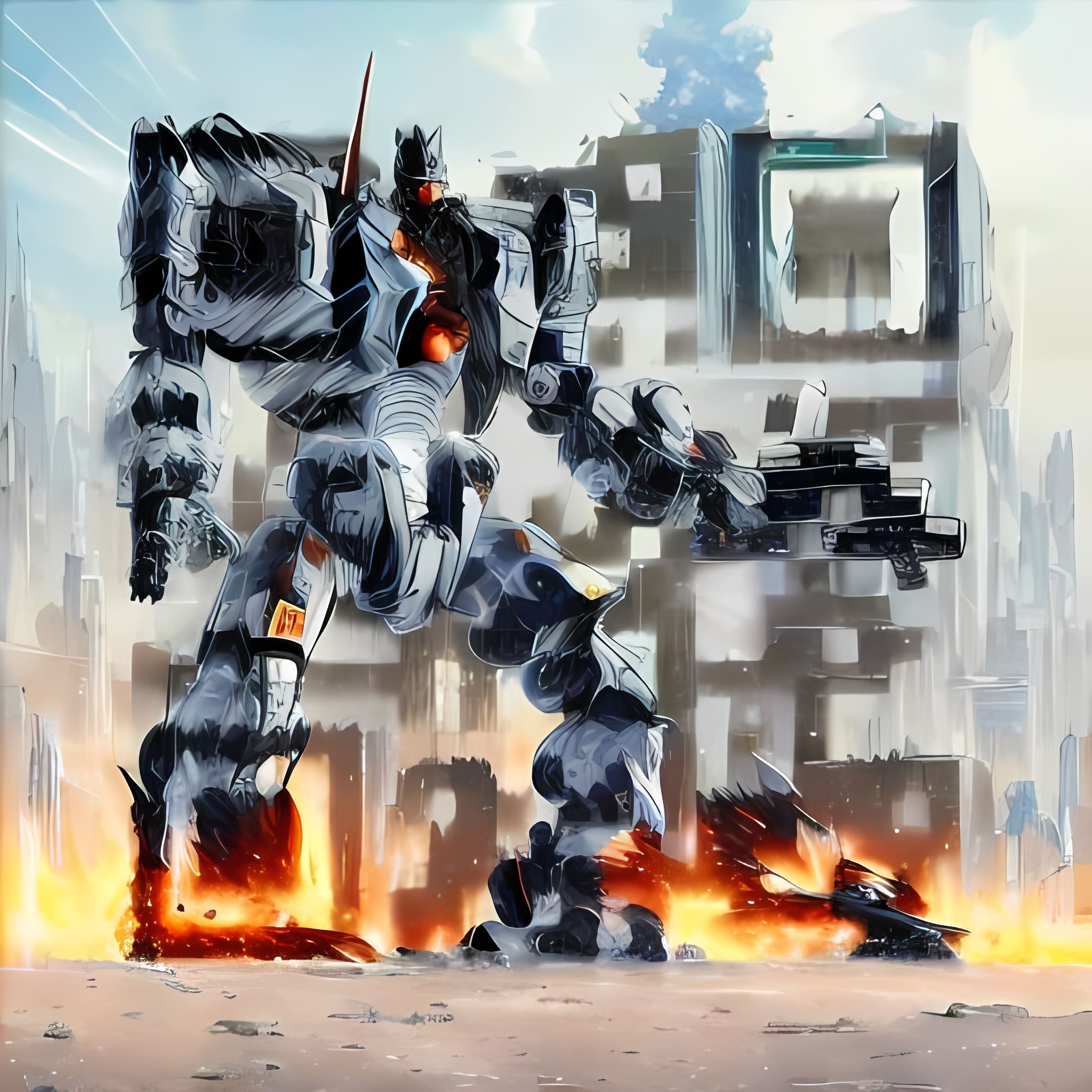
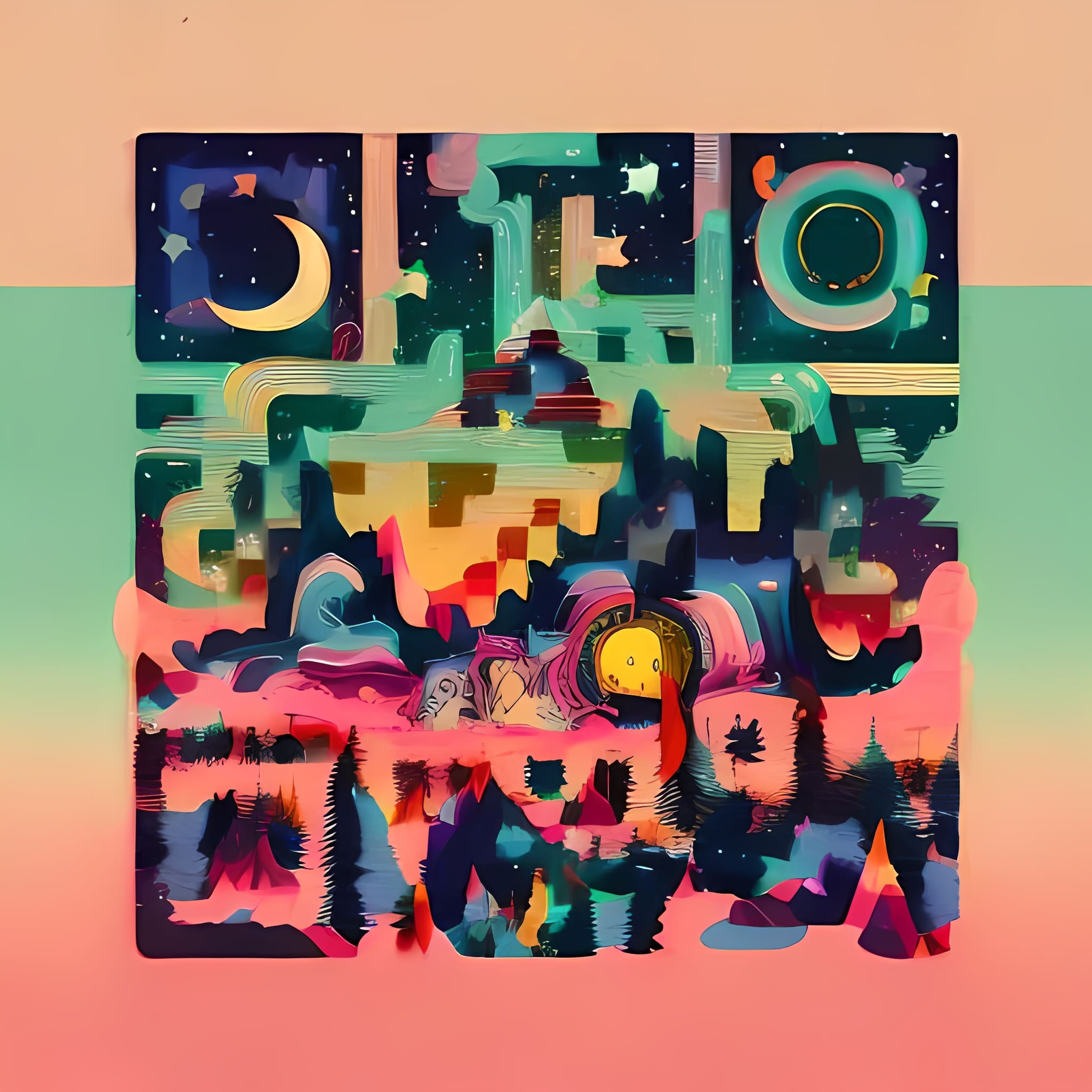
In terms of vision guidance, if you have ever used tools like Midjourney, you know how difficult it can be to engineer the exact prompt for the image you envision. When you add the strict geometric constraints of a working QR code into the mix, it becomes even more challenging. Because of this immense friction, most platforms simply offer a set of fixed-style templates.
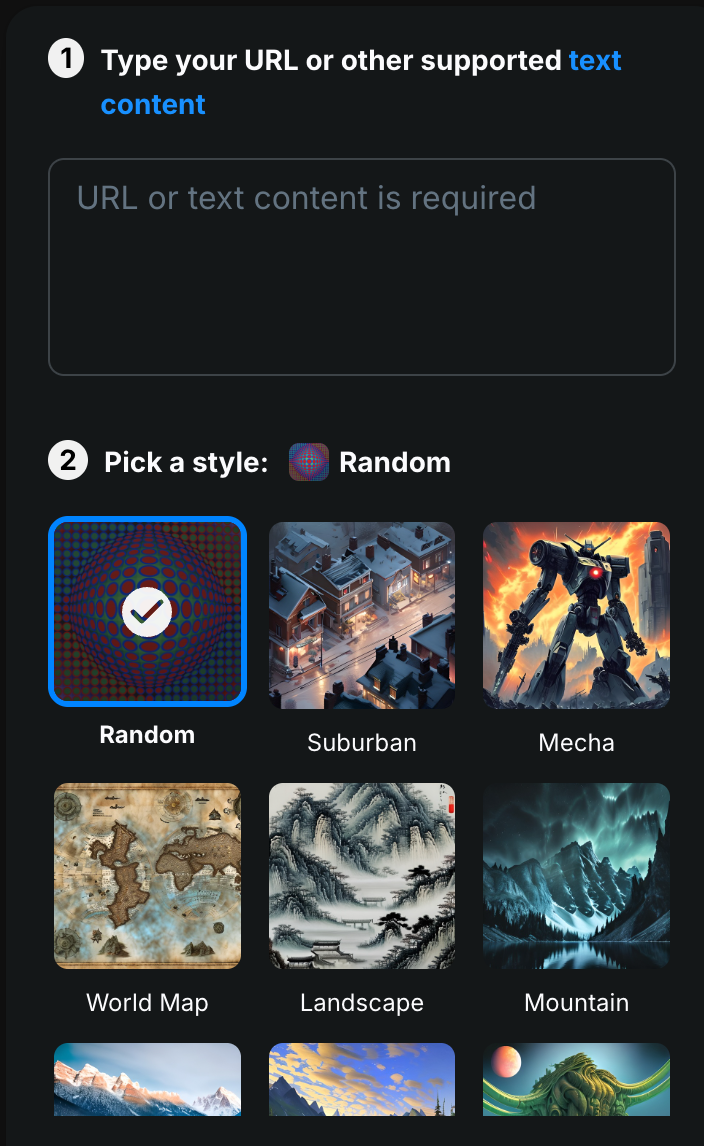
While templates offer the shortcut to generate aesthetic QR codes, they strip away the very thing creators want most, the creative freedom.
Introducing 72QR: QR Code as Art
It was exactly the struggle of creative freedom that drove me to look for a better way. The idea started with a simple experiment: I wanted to design a T-shirt that looks artistic and is still functionally scannable. After spending countless hours wrestling with those AI generators, I kept hitting the same wall. The results were either aesthetically pleasing but unscannable, or perfectly scannable but visually disjointed. There was no reliable way to achieve both.
I decided to dig into the fundamentals of how QR codes actually work and how they can be integrated with AI models to generate artistic, functional QR codes. Eventually, I came up with a QR code design tool, the 72QR.
72QR is a conversation-based QR code canvas. Instead of wrestling with complex parameters or settling for rigid templates, anyone who knows how to use a chat app can now design a meaningful, scannable QR code simply by chatting with the agent in a web UI. You can express your ideas in natural language, and the interactive agent will guide you through tuning the style and scene, acting as a collaborative design partner.
The Canvas in Action
Let’s look at how 72QR works in practice, taking a rough sketch and iteratively refining it into an artistic, scannable QR code.
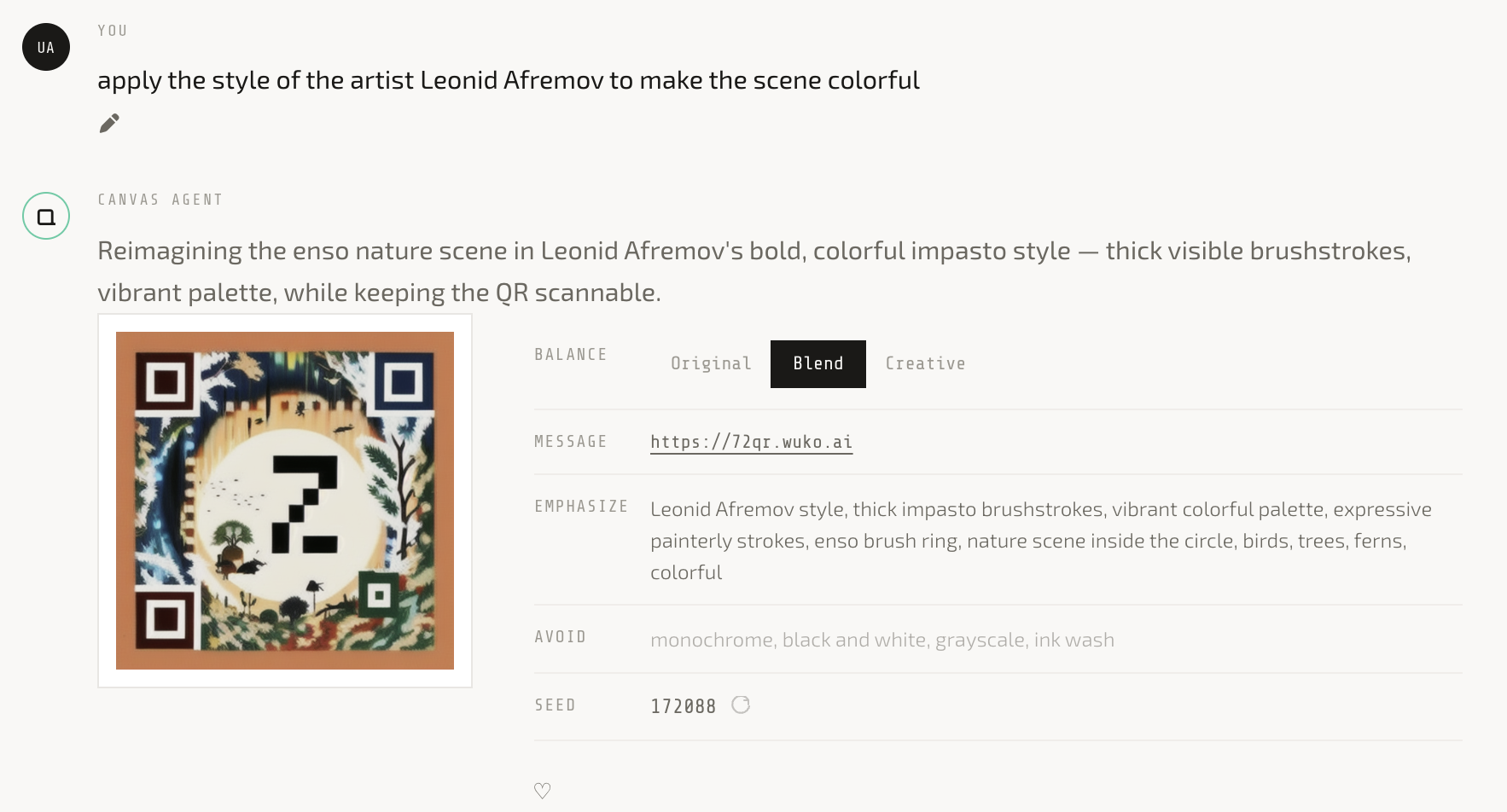
- The Starting Point: We begin with a simple sketch—the 72QR logo centered inside an enso circle decorated with a biosphere. The logo itself feels a bit blocky and disconnected from the environment, but it gives the agent a structural baseline.
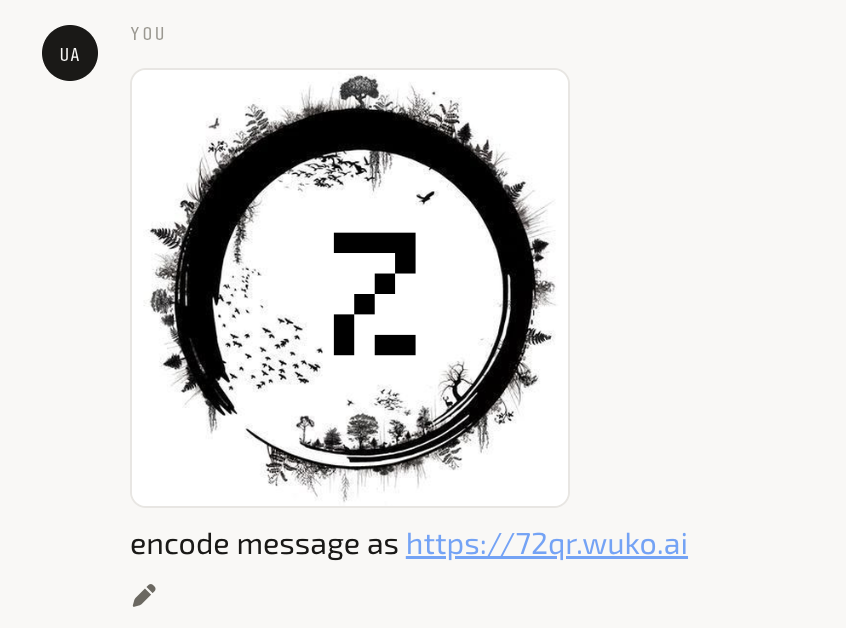
- The First Pass: By sending this sketch and asking the agent to encode the URL https://72qr.wuko.ai, we immediately get a working, scannable QR code that aligns with the original aesthetic.
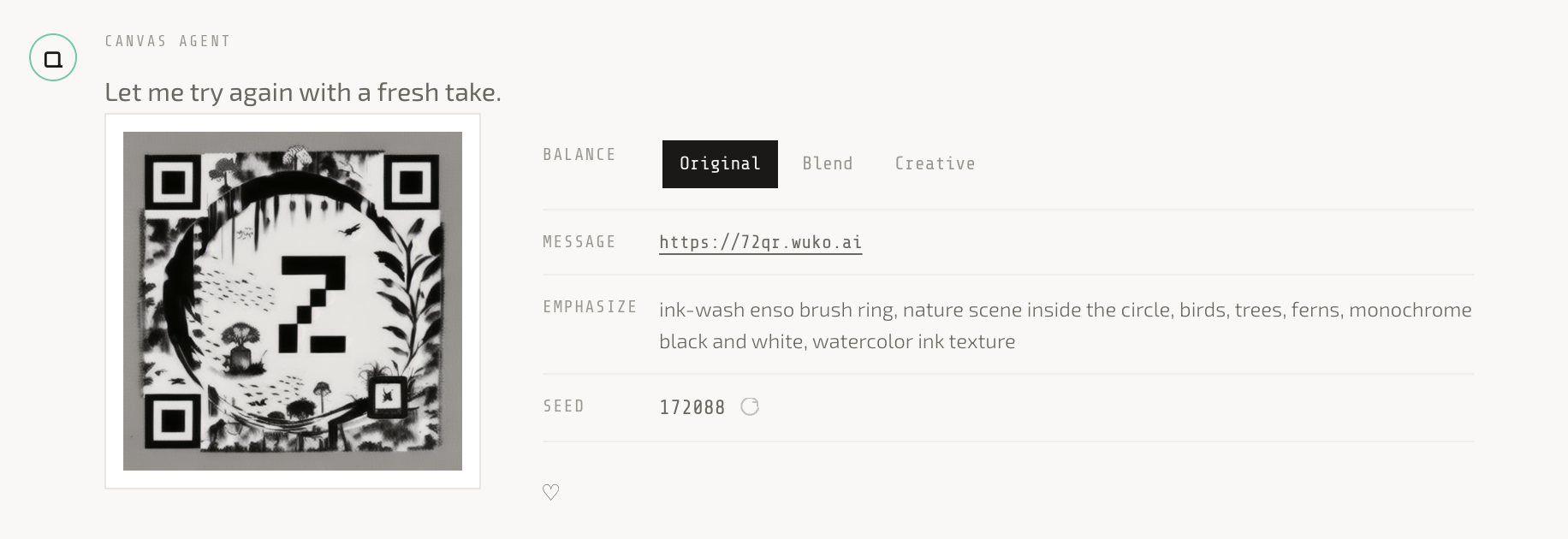
Note that at the right side of the QR, there are some meta info about the QR code. Balance means the preference between the original style or guiding toward something more creative. By default, the agent configure the balance to Original, and derive the keywords from the image for Emphasize, which you can tune in other rounds to guide the generation, such as toward different styles and scenes as shown below.
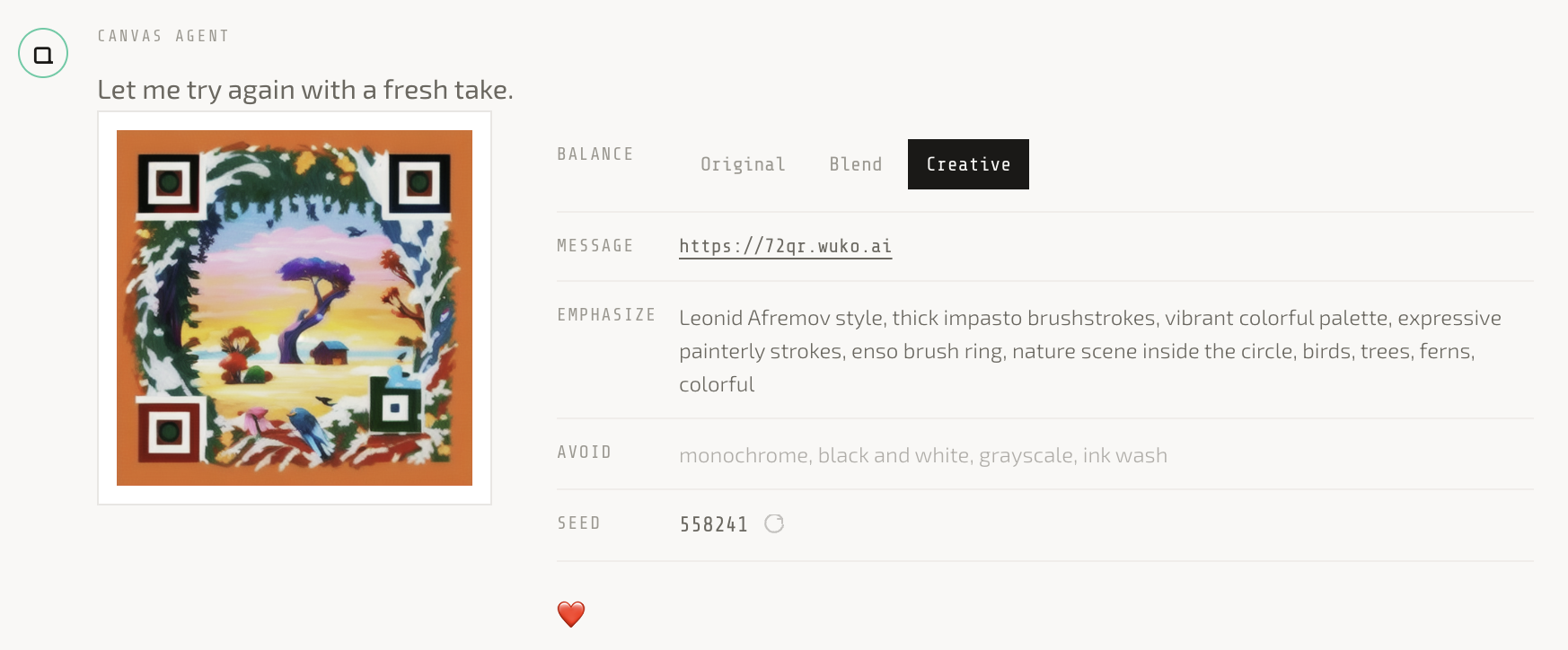
- Tuning the Vibe: To make the scene more vibrant and cohesive, I simply asked the agent to shift the Balance to Creative and adjust the Emphasize keywords. This combination of tuning led the AI to lose the constraints of the original sketch, and have more freedom to transform the blocky logo organically into objects cohesive with the scene, like a tree and a house, blending perfectly into the environment.
- Exploring Variations: If you like the style but want to see different compositions, the Seed acts as a creative dice roll. Refreshing it generates a brand-new composition using the exact same parameters, while keeping the overall scene consistent.
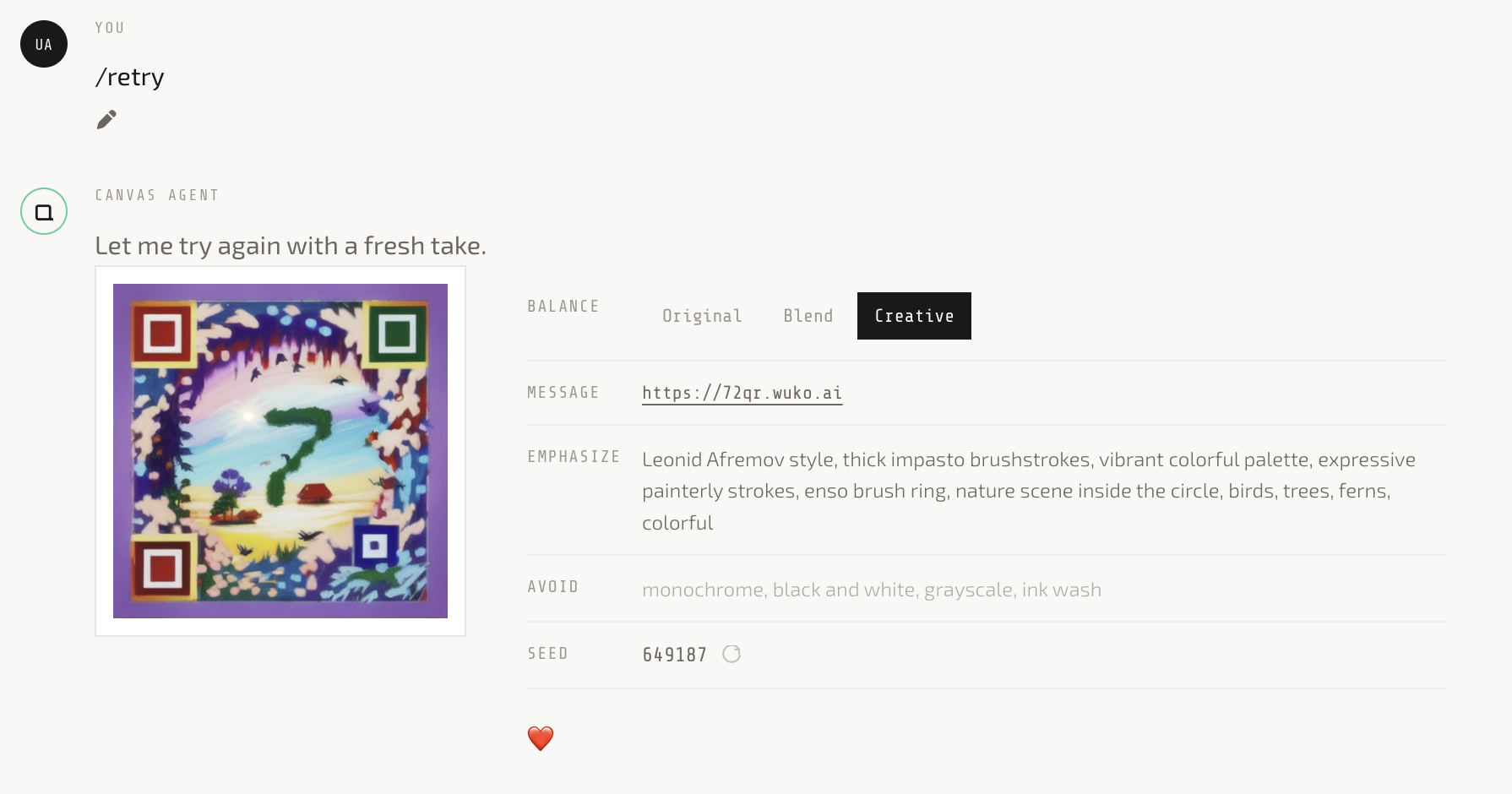
This is the result of the same meta info but with a different seed. It also looks good like the previous one, but the composition is different while the vibe is still pretty consistent with the previous one.
Beyond the Sketch
The sketch demo above is to illustrate the creative process using 72QR. You can bypass sketching entirely and simply upload reference photos to generate QR codes with a similar vibe and atmosphere.
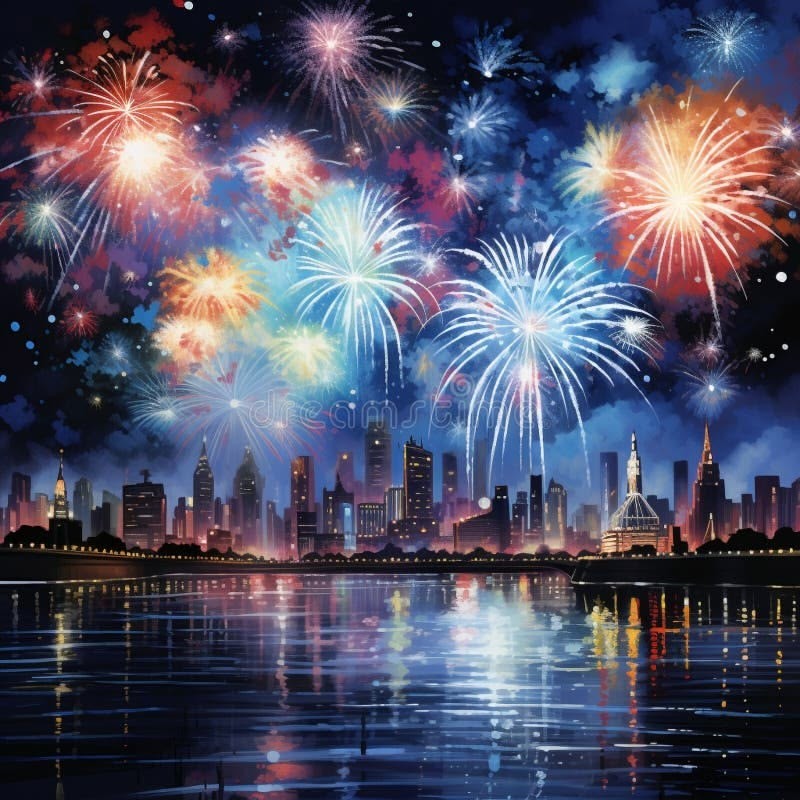
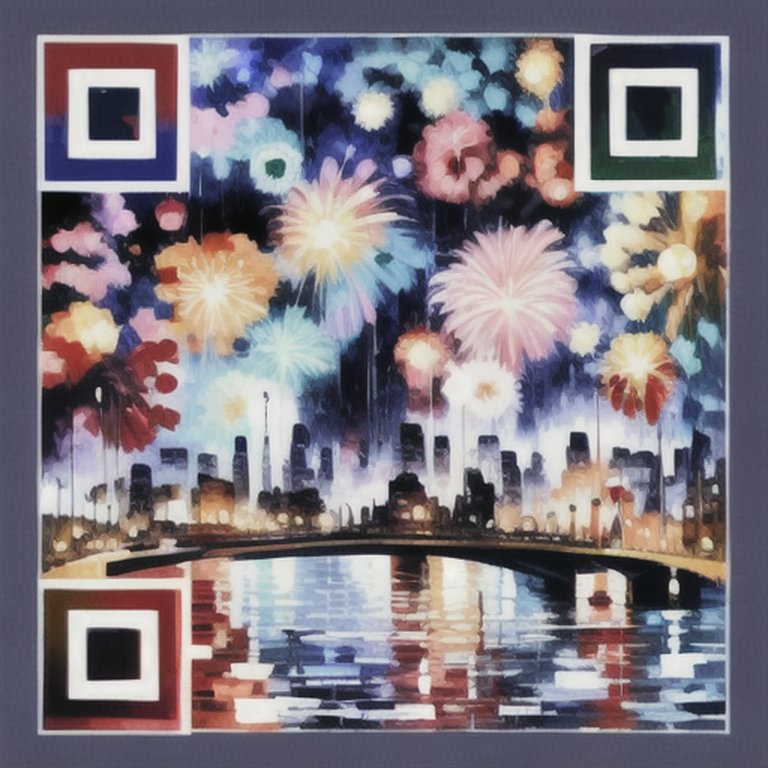
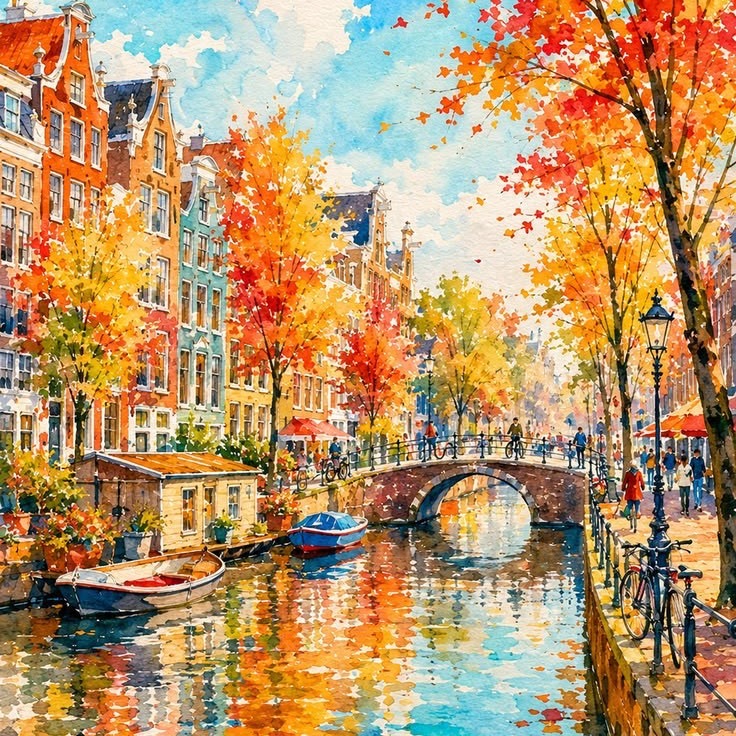
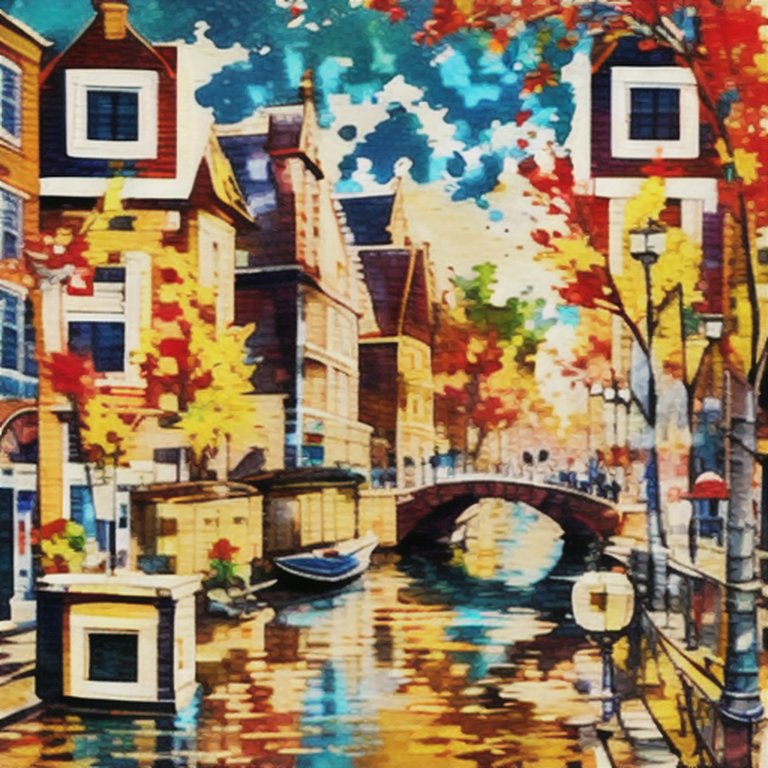
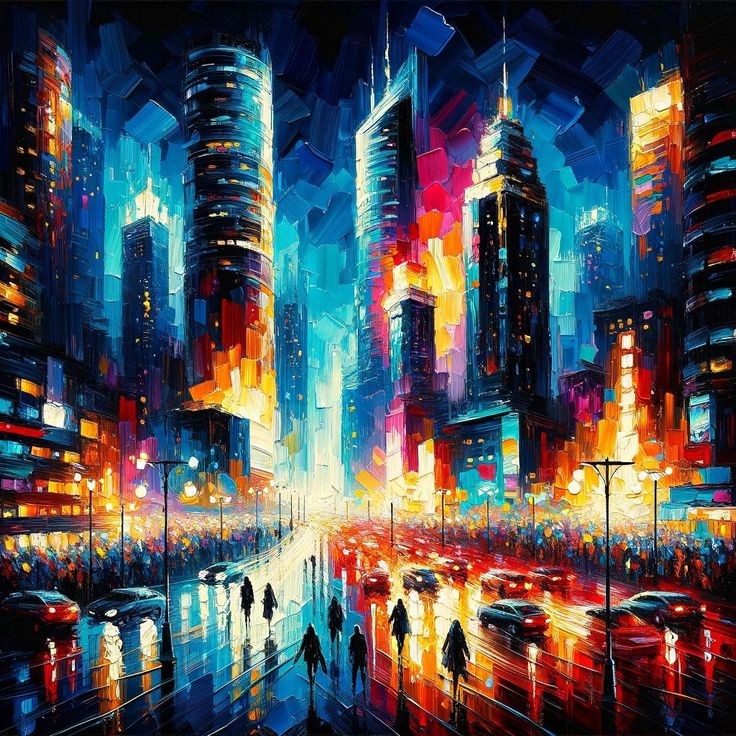
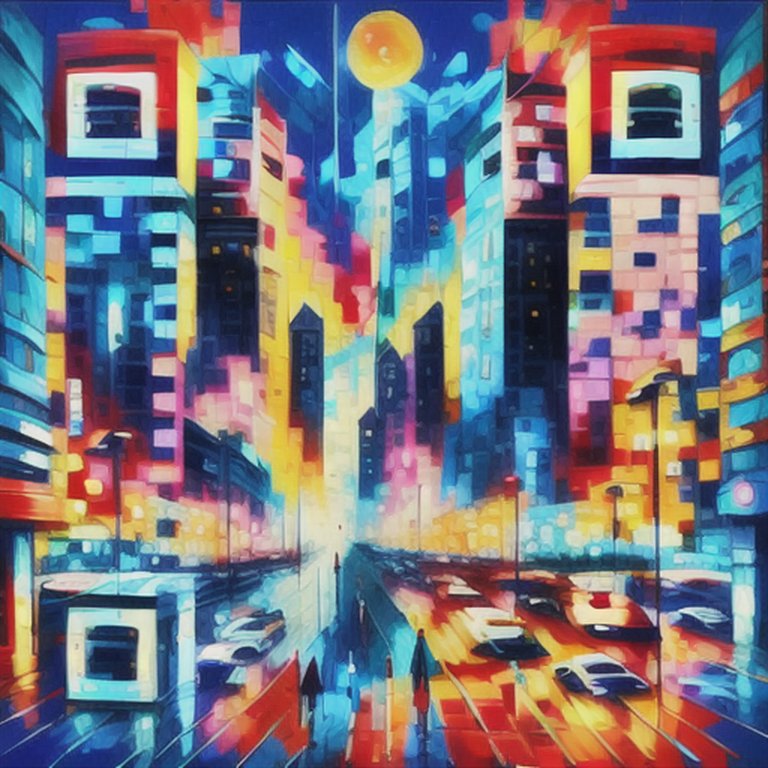
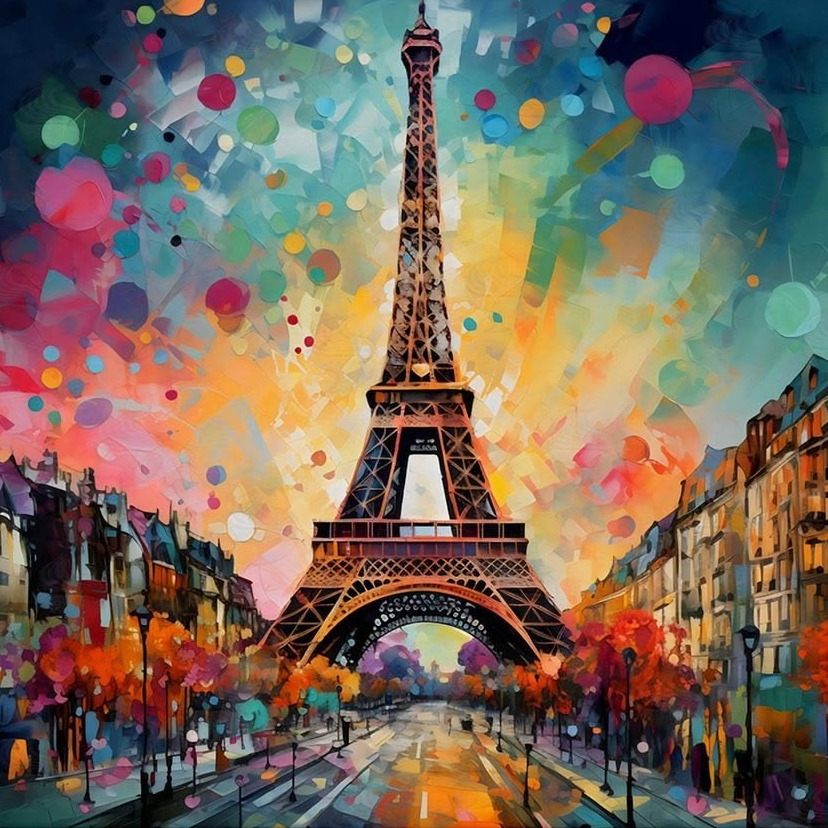
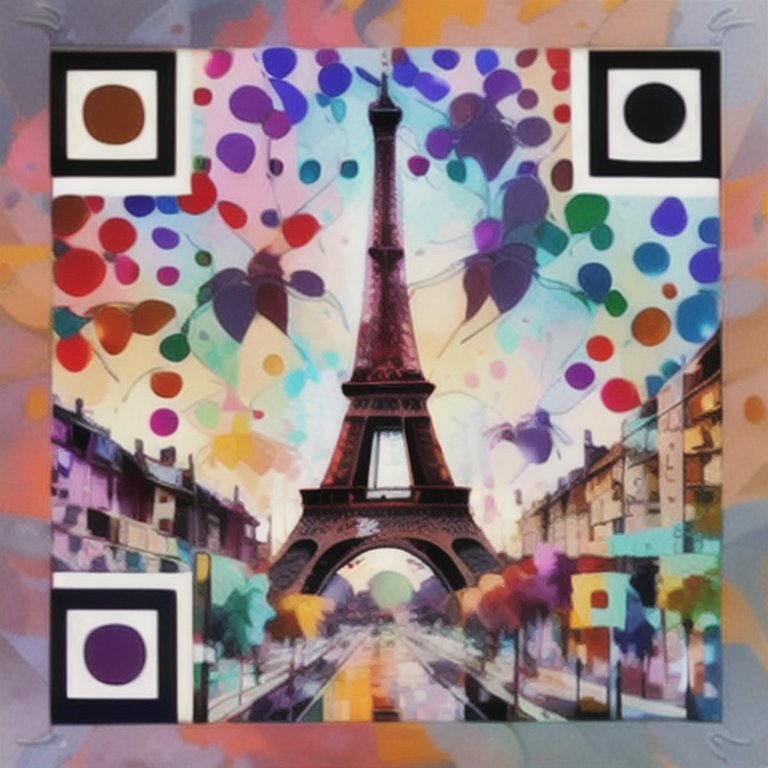
Whether you want to strictly follow an original style or guide the AI toward entirely new scenes, 72QR is flexible enough to adapt to your creative direction.
Turn Your QR Codes Into Art
QR codes don’t have to be an eyesore anymore. With 72QR, you get the creative freedom of generative AI, the reliability of a scannable code, and a design process as easy as sending a chat message—no parameter tuning, no prompt engineering, no rigid templates.
Whether you are designing a T-shirt, branding an event, or just want your QR codes to finally match your aesthetic, give 72QR a try.
Bring a sketch, an artwork, or just an idea, and see what the canvas can do. I would love to hear what you create. Reach out and share your results!